

For people living with knee osteoarthritis on the Gold Coast
You know it’s osteoarthritis. You still don’t know what that means for your knee.
The Healthy Knee Assessment is a 60-minute assessment built specifically for people with knee OA. You leave with a clear explanation, a personalised report card scored out of 100, and a follow-up phone consult so you know exactly what to do next.
An assessment, not a treatment commitment. You will leave with answers whether or not you ever do anything else with us.
A diagnosis names the condition. It tells you almost nothing about your knee.
Most people arrive here with a version of the same story. Someone looked at a scan, said the word osteoarthritis. Perhaps a suggestion to lose a bit of weigh and maybe a knee replacement on the horizon.
So you left knowing what it is called. And still not knowing what is actually happening in your knee.
You don’t know why you can walk the beach one day and find the stairs a problem the next. You don’t know whether your quadriceps are strong or weak. You don’t know whether you have been quietly shifting your weight onto the other leg for years. You don’t know whether your sleep, your stress or what is on your plate is turning the volume up on all of it.
That is the real gap. Not the diagnosis — the detail.
Two people can have knees that look almost identical on a scan and live completely different lives. Different pain. Different function. Different options in front of them. The difference sits in the things a diagnosis never measures.
The diagnosis is common. Your knee isn’t.
Before you can make a good decision about what to do, you need an honest picture of what you are working with.
Your scan shows what is there. It cannot tell you what to do about it.
Imaging has its place. It shows the structure of the joint and it rules things in and out. But a scan is a still photograph. It cannot measure how your knee behaves when you actually ask something of it.
What a scan cannot tell you
How you are walking
How you get in and out of chairs
What muscles are strong and what muscles are weak
How much you sway when you stand on one leg
How much force your quadriceps can produce, and whether one leg is weaker than the other
How evenly you load each leg when you squat, and how deep you can go
Whether your sleep, stress levels or diet quality are contributing to your symptoms
How much you understand about your own condition, and how confident you feel managing it
Your knee is more than what a scan shows.
Every one of those things is measurable. Every one of them can change. And together they have a great deal to say about how your knee feels day to day.
Knee osteoarthritis is not a simple wear-and-tear problem that inevitably worsens the more you use your knee. You do not run out of steps. You do not have a fixed number of uses left in the joint. The long-term health of your knee is strongly influenced by your strength, your function, and exposing the knee to the right kind and amount of load.
How you move, how active you are, and how your body responds to daily stress all play an important role in how your knee feels and functions.
The Critical 3
The Healthy Knee Assessment is built around the three areas that have the greatest influence on knee pain, stiffness and long-term knee health. We call them the Critical 3.

Activity
Staying active is essential for keeping your knee strong and healthy. The right type and amount of activity can reduce pain and stiffness, improve walking, balance and confidence, and support your independence and quality of life.
Inflammation
Inflammation can increase knee pain and sensitivity even when the joint itself has not changed. Body weight, diet, sleep quality and stress levels all influence inflammation in the body.
Knowledge
Understanding your knee is powerful. People who understand what knee osteoarthritis is and is not, what movements are safe, and how to manage a flare-up are often more confident and achieve better outcomes.
Assess all three together and you get something a scan cannot give you: a clear, personalised picture of what is driving your symptoms and where your biggest opportunities for improvement sit.
There are more options on the table than you have probably been offered.
A lot of people arrive with the same mental map. Put up with it for now. At some point down the track, have something done.
That map is missing most of the territory.
Between doing nothing and having surgery sits a considerable amount of ground. For most people it is ground that has never been properly explored, because nobody has measured what is actually going on in the knee.
What a proper assessment gives you that general advice cannot
Numbers instead of impressions. Your quadriceps and hamstring strength measured in kilograms, each leg separately. Your balance measured on force plates. Your walking capacity measured.
Benchmarks that mean something. Every result is compared against reference values based on age, sex, body weight and population data, so you know whether your result sits in a healthy range rather than just being told it is "a bit weak".
All three of the Critical 3, not just the joint. Most assessments stop at the knee. Yours also looks at sleep, stress, diet quality and how well you understand your own condition — because those influence your pain too.
A single score you can track. Everything is scored and totalled out of 100, so when you repeat the assessment down the track you can see exactly what has moved.
The assessment is conducted by Dr Adam Walker or Adrian Kan. Both work specifically with knee osteoarthritis and both are active in knee research. Their profiles are further down this page.
Want to read more before you book?
Our knee osteoarthritis article library covers the questions people ask us most — why knee pain changes day to day, how exercise helps, whether injections are worth considering, and what a meniscus tear in an older knee actually means.
Generic advice hasn’t worked because it was never built for your knee.
Is it as simple as losing a bit of weight, strengthening the knee and exercising more? Far from it. That completely undersells how individual this condition is.
If you have done physiotherapy before and it did not change much, that is worth taking seriously. But it is rarely evidence that nothing works. More often it is evidence that nobody measured anything, so nobody knew what to aim at.
A general exercise program treats everyone with the same diagnosis as though they have the same knee. A specialist assessment starts from the opposite position.
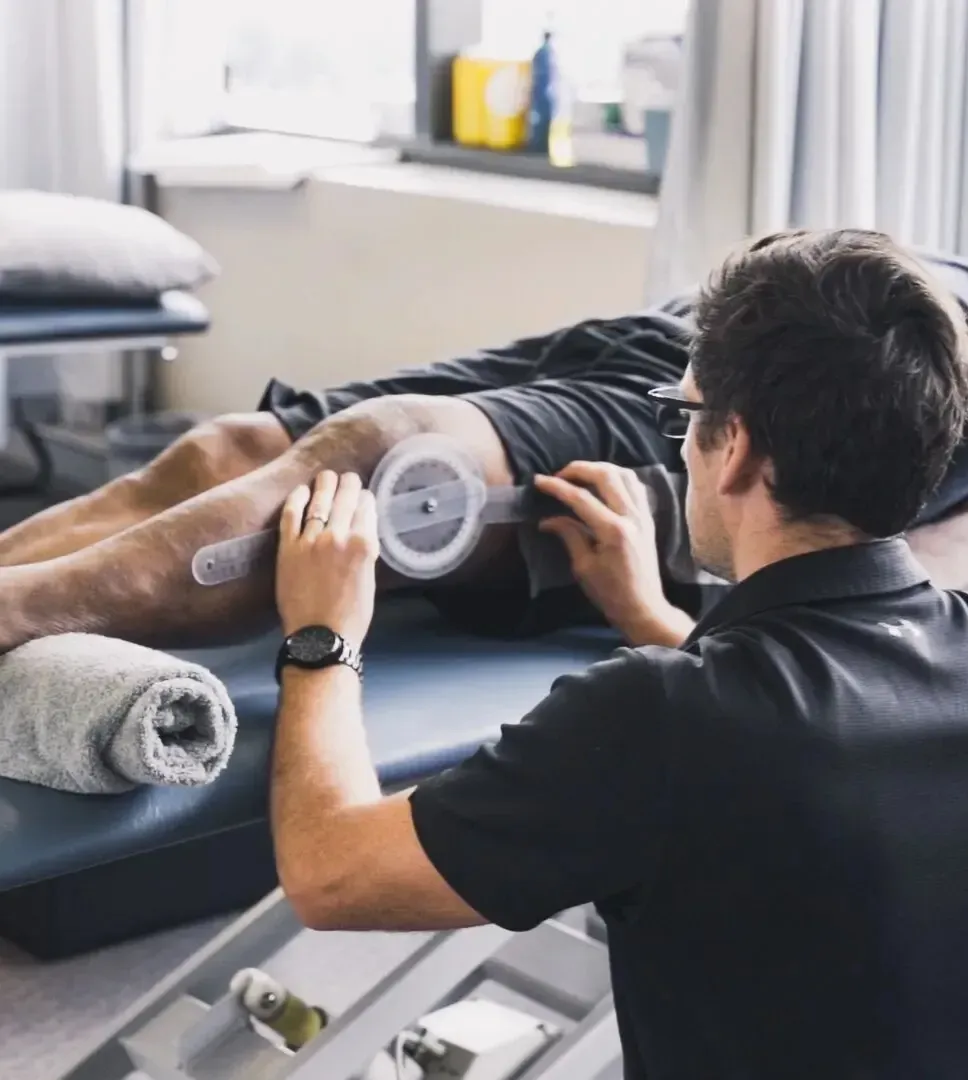
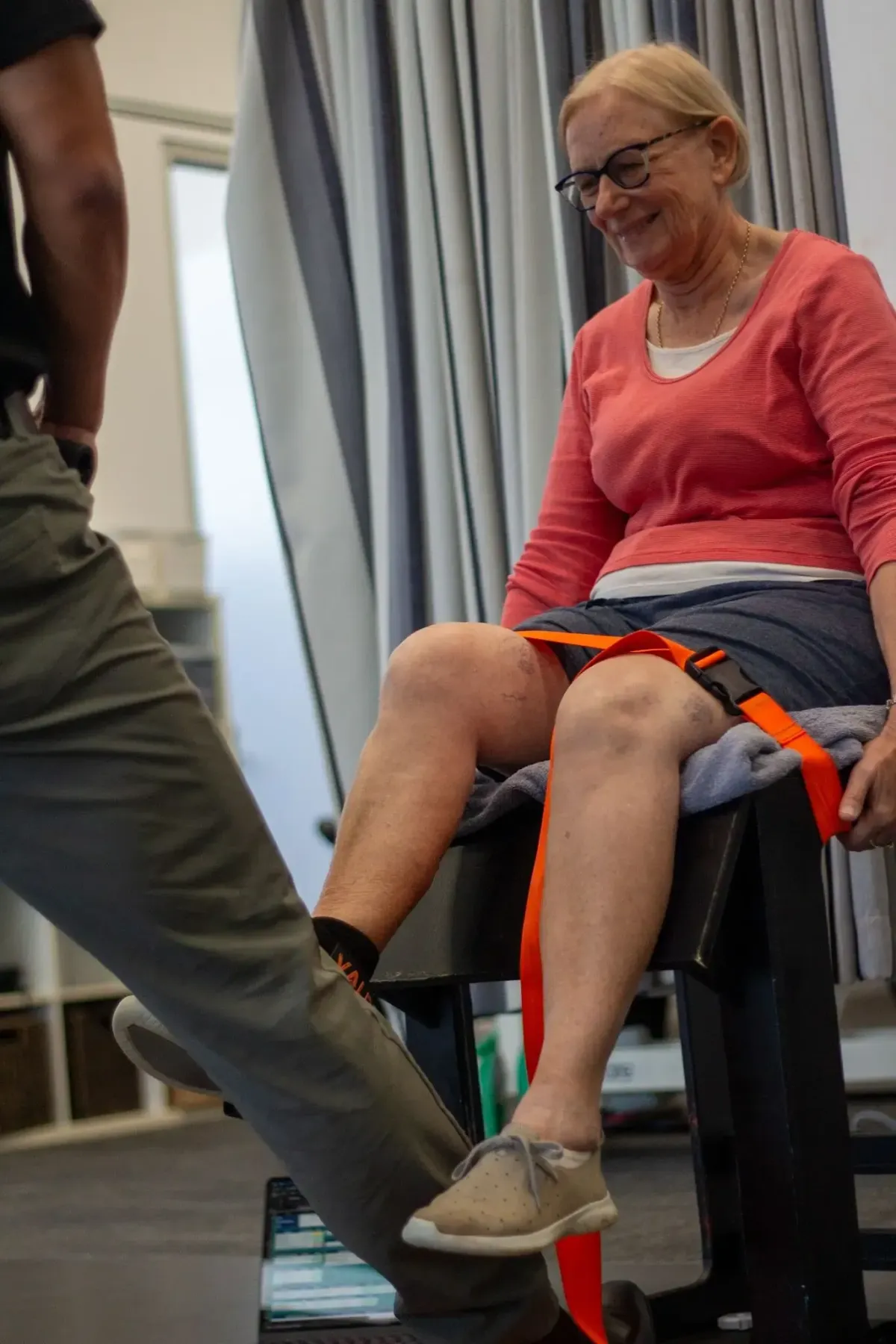
What the Healthy Knee Assessment actually involves.
Sixty minutes, one-on-one, with Dr Adam Walker or Adrian Kan. It is designed specifically for people with knee osteoarthritis, and it is built around the Critical 3.
We check your strength, mobility, balance and how your knee handles everyday movements. We assess how reactive or irritated the joint is, how much swelling or stiffness is present, and which lifestyle factors may be contributing to your pain. And we look at how well informed and how confident you feel managing your knee, because that shapes your outcome as much as anything else.
What you leave with
Your personalised Healthy Knee Report Card. Every result laid out, colour-coded using a simple traffic light system — green for passed, yellow for good but could be improved, red for needs attention — and totalled into a single score out of 100. Alongside it, a written clinical opinion in plain English from the clinician who assessed you, covering what your results mean for your specific goals.
A written guide explaining every test. Our Testing Results Explained guide sets out the purpose and target range for each measure, so you can go back over your results at home rather than trying to remember everything from the appointment.
A follow-up phone consult. Your physiotherapist walks you through which areas matter most for you, links your results to your pain, your confidence and your daily activities. We talk through what it means and agree what happens next.
What changes as a result
You stop guessing. You know which of your knee’s systems are holding up and which ones are letting you down. You know whether the problem is strength, loading, inflammation, understanding, or some combination. You know what to work on first, and what to leave alone for now.
You also have a starting number. Repeat the assessment in three months and the change is visible rather than a matter of opinion.
What’s the investment?
$197.00
60 minutes
Private health and Care Plan rebates may apply depending on your level of cover and your eligibility. Check with your fund or your GP before your appointment.
What’s included
60-minute one-on-one assessment
Clinical examination and history to understand you
Force plate testing to quantify how you move
Objective strength testing to see how strong your legs are
Physical performance testing to see how you handle everyday movements
Inflammation and lifestyle screening to check what else is contributing to pain
Knowledge assessment to see what you know about your knee
Your Healthy Knee Report Card detailing your results and what they mean
Written clinical opinion so you know what to do next
Testing Results Explained guide to understand your results with confidence
Follow-up phone consultation to plan whats next and answer any questions
The questions people ask before they book.
I’ve already tried physio. Why would this be different?
Because this starts with measurement rather than treatment. Most physiotherapy for knee osteoarthritis begins with a set of exercises and hopes for the best. This begins with objective numbers across strength, balance, walking capacity, inflammation and knowledge, benchmarked against people of your age and size, so any plan that follows is aimed at your actual deficits. If your previous program did not work, the assessment is likely to show you why.
Do I have to join a program afterwards?
No. The assessment stands on its own. If your results suggest a structured program such as the Healthy Knee Program would suit you, we will say so and explain why — but the point of the assessment is clarity first. Plenty of people take their report card and their plan and get on with it themselves.
What if the assessment shows I need surgery?
We do not make surgical recommendations — that is a conversation for you, your GP and an orthopaedic surgeon. What we can do is give you an objective picture of your strength, function and lifestyle factors, which is useful information to take into that conversation whichever way it goes.
Is it going to hurt?
The assessment involves strength testing and movement testing, so you will be working. We adjust the testing to what your knee can tolerate on the day, and nothing is done without explaining it first.
Do I need a referral from my GP?
No, but you can get a GP Care Plan to receive a Medicare rebate for the session. Private Health Insurance may also be used.
How long until I get my report?
The report will be completed within 24 hours of the appointment.
Book the assessment. Get the picture. Then decide.
You have had the diagnosis. What you have not had is a clear, measured picture of your own knee and a plan built from it. That is what this is. Sixty minutes, a report card, a phone consult, and a genuine understanding of what is going on and what can be changed. It is not a commitment to treatment. It is an investment in knowing where you actually stand — which is the only sensible place to make a decision from.
If you have a question before you book, call us on 0408 051 943 or email [email protected].
Who you will be seeing.
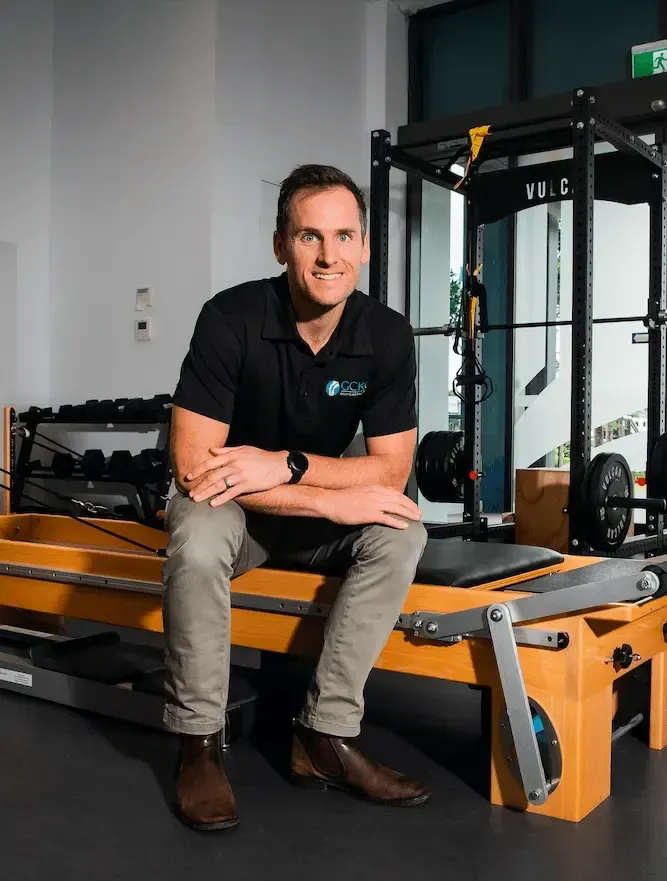
Dr Adam Walker, PhD
Founder, Gold Coast Knee Group
Adam founded Gold Coast Knee Group with a focus on helping people with knee pain move better, feel more confident and stay active for longer.
His approach is grounded in his PhD research, which examined optimising ACL rehabilitation, and in thousands of clinical consultations with people experiencing knee pain, stiffness, arthritis and injury. He combines evidence-based care with clear explanations and practical strategies that support long-term knee health.
Adam also teaches within the Bond University physiotherapy program and remains actively involved in knee research.
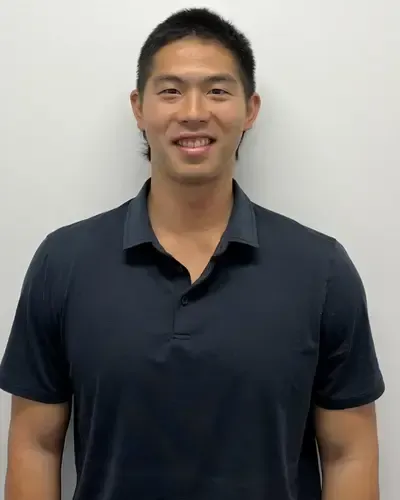
Adrian Kan
Older Knee Lead Physiotherapist and Researcher
Adrian is a physiotherapist and researcher with a strong interest in managing ongoing knee pain and knee osteoarthritis.
He combines clinical experience with up-to-date research and is currently completing a PhD focused on best-practice management of knee osteoarthritis through Bond University and has presented at national and international conferences.
Adrian is known for his calm, supportive approach and clear communication, helping people feel informed, reassured and confident in managing their knee health.
In the media.
Our clinicians contribute to public conversation about knee health, osteoarthritis and rehabilitation. You can see where our work has been featured.

We help people with injured and painful knees
Join Our Mailing List
Copyright © 2026 Gold Coast Knee Group. | Privacy Policy